Every digital twin vendor now has a slide about “world models.” NVIDIA has Cosmos. Siemens has been layering generative AI partnerships into Xcelerator. Rockwell has talked up AI-assisted simulation inside its Emulate3D and FactoryTalk stack. The pitch is seductive: instead of hand-building a physics simulation of your line, you feed a model video and sensor data, and it learns to generate plausible futures — new camera angles, new failure modes, new layouts — without anyone writing a kinematic equation.
Some of that is real. Some of it is booth demo dressed up as production capability. The job of a practitioner right now is telling the difference, because the failure mode isn’t “the technology doesn’t work” — it’s “the technology works well enough to look trustworthy in places it hasn’t been validated.”
What a world model actually is, in plain terms
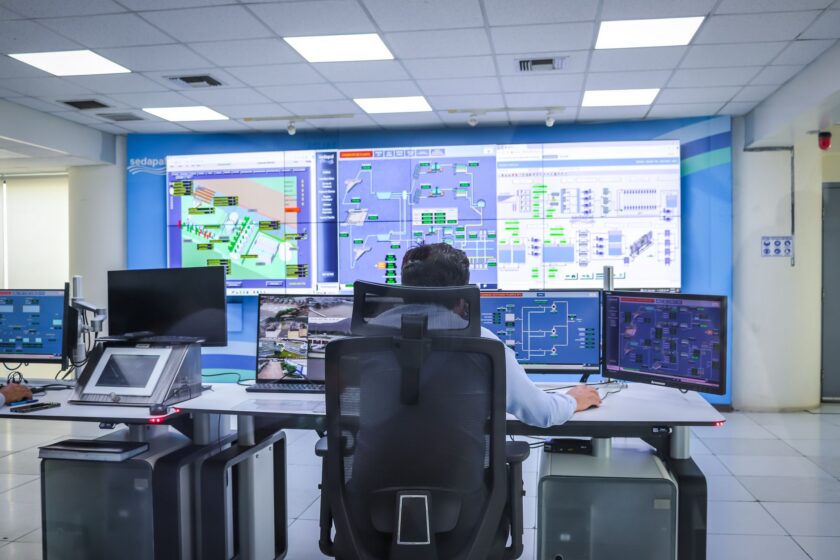
A traditional digital twin — the kind built in Siemens Plant Simulation, Emulate3D, or a custom physics engine — is deterministic. You define geometry, mass, friction, kinematics, control logic. Run it twice with the same inputs, get the same output. That determinism is exactly what makes it auditable: an engineer can trace why the simulation predicted a collision or a throughput number.
A world foundation model is a generative model, architecturally closer to a video-generation AI than a physics engine. It’s trained on large volumes of video, sensor, and trajectory data and learns statistical regularities about how the physical world tends to behave — objects fall, arms sweep through predictable arcs, forklifts don’t clip through walls. NVIDIA’s Cosmos models are explicitly positioned as this kind of “world foundation model,” meant to generate synthetic video and scenario data for training robots and vision systems inside Omniverse pipelines. It’s genuinely impressive as a data-generation tool. It is not a physics solver, even when it produces output that looks like one.
That distinction — learned plausibility versus computed physics — is the whole ballgame for how you should use it.
Where it’s genuinely useful today
Synthetic training data for vision systems
This is the strongest, least controversial use case. Machine vision models for defect detection, bin picking, or pallet recognition need huge, varied labeled datasets — including edge cases that are rare or dangerous to collect on a real line: a torn label, a partially occluded part, unusual lighting, a near-miss collision angle. Generating that variety synthetically, at scale, with automatic ground-truth labels, is a legitimate and already-proven use of generative world models. You’re not making a safety decision with the output; you’re making a better-trained classifier, which then gets validated the normal way, against real parts on a real line.
Rare-event and failure-mode exploration
Deterministic sims are only as good as the scenarios an engineer thinks to model. A generative model can propose a wider spread of “what could plausibly go wrong” scenarios — an AMR encountering an unusual obstacle configuration, a jam propagating differently than expected — that help you decide what to go build a rigorous test case for. Used this way, a world model is a hypothesis generator, not a verifier. That’s a legitimate and valuable role, as long as everyone downstream understands it’s brainstorming, not proof.
Layout what-ifs before AMR or conveyor changes
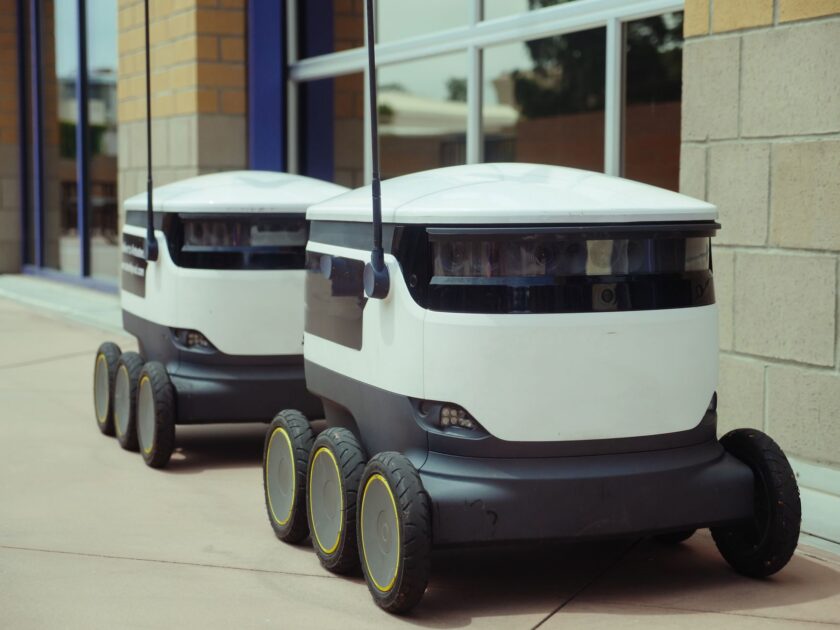
Early-stage layout exploration — where do we even put the charging stations, does this aisle width look workable, what does traffic congestion look like qualitatively at three different dock configurations — is a good fit. You’re making a directional decision, not certifying a safety envelope. Generative approaches can iterate through layout variants faster than building full physics models of each one, letting you narrow to a shortlist that then gets properly simulated.
Where you should still insist on deterministic simulation
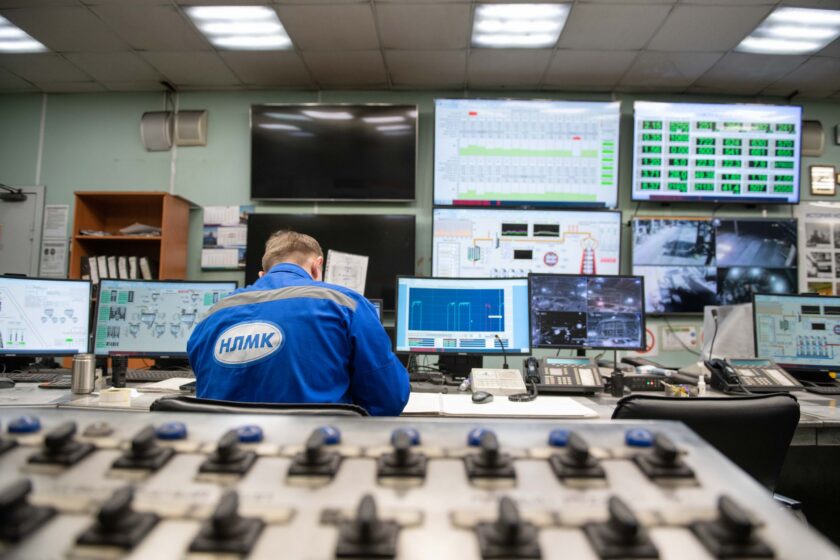
Anything that touches a safety-rated function, a contractual throughput guarantee, or PLC/robot logic validation needs a physics-based, deterministic model with a documented traceability chain. That’s not conservatism for its own sake — it’s what your safety case, your integrator’s warranty, and in many cases your insurer and regulator actually require.
- Safety-rated motion and interlocks: ISO 10218, ISA-84, and your machine safety documentation assume verifiable, repeatable behavior. A generative model’s output is a statistically likely scenario, not a certified worst case. You cannot discharge a safety function validation with “the model generated a plausible near-miss and it looked fine.”
- Throughput and capacity commitments: If a systems integrator is contractually guaranteeing cycle time or OEE targets, the simulation backing that number needs to be reproducible and explainable line-by-line. A black-box model that can’t say why it predicted a number isn’t defensible in a commissioning dispute.
- PLC logic and control validation: Testing ladder logic, sequence interlocks, or safety PLC behavior against a virtual controller (the classic “virtual commissioning” pattern) requires exact timing and state fidelity. Generative world models aren’t built to replicate discrete control logic deterministically — that’s a job for emulation tools that actually execute the control code.
A vendor-claims checklist
When a vendor tells you their platform now has “AI-powered digital twin” or “world model” capability, ask directly:
- Is the output generative (plausible) or computed (deterministic)? Get them to say the word.
- Can two engineers reproduce the exact same result from the exact same inputs?
- What’s the validation path — does the model’s output get checked against real sensor data, and how often, and by whom?
- Is this feeding a decision that used to require an engineer’s sign-off? If so, does the sign-off process still exist, or has it quietly been replaced by “the model said so”?
- What happens when the model is wrong? Is there a documented failure mode, or does the vendor treat that as out of scope?
The traceability gap nobody’s pricing in yet
The real risk over the next couple of years isn’t that these models fail obviously — it’s that they succeed often enough to get quietly trusted for decisions that used to go through engineering review. A generative layout tool that “looks right” nine times out of ten will eventually get used to skip the physics-based verification step, because it’s faster and usually correct. That’s how you end up with an AMR fleet deployment or a line reconfiguration that was never actually verified against deterministic collision or throughput models, just against something that generated a convincing video.
Treat world models as an excellent front end for exploration and data generation, sitting upstream of your validated digital twin — never as a replacement for the part of your pipeline that has to be able to explain itself.
This article was written with the assistance of artificial intelligence. While we aim for accuracy, the information may be incomplete, out of date, or incorrect, and should be independently verified before you rely on it for any decision. It is provided for general information only and does not constitute professional advice.